

The Bahamas has long been a top choice for international buyers seeking sun, stability, and serious returns on property. With 12.5 million international visitors in 2025, the archipelago’s appeal shows no sign of fading. The country ranked third globally for prime residential property markets, fueled by strong foreign investment and a robust tourism industry.
This guide is built for foreign buyers, second-home seekers, and investors evaluating the Bahamas for rental income, capital appreciation, or lifestyle diversification. Below, you will find a practical breakdown of current market conditions, taxes and ongoing costs, the buying process, financing, foreign ownership laws, and strategies for maximizing your investment returns.
Bahamas Real Estate Market Snapshot
The Bahamas real estate market thrives on a combination of tourism-driven demand and constrained supply of prime waterfront parcels. Following the post-2024 tourism boom, the market has settled into steady growth. Median sale prices in Nassau and New Providence increased from approximately USD 465,000 in late 2024 to USD 600,000 by mid-2025, while average sale prices reached roughly USD 1.2 million, reflecting continued strength in the luxury segment. Days on market have also been decreasing, and list-to-sale ratios are tightening across key islands.
On the Out Islands-Exuma, Eleuthera, and Abaco-entry points remain more accessible, though luxury waterfront properties there have also seen notable price jumps. Inventory levels began increasing slightly in late 2025, which may give buyers more negotiation room heading into 2026.
The main buyer profiles driving this market include:
- U.S. and Canadian retirees seeking a vacation home or retirement base
- Remote professionals attracted by lifestyle, climate, and flexibility
- High-net-worth individuals acquiring luxury residences and trophy assets
- International investors and wealth preservation-focused families pursuing residency and tax efficiency
- Yield-focused investors targeting short-term rental income and long-term appreciation potential
Compared to Cayman, Barbados, and Turks & Caicos, the Bahamas offers a broader range of diverse real estate options, closer proximity to U.S. cities (Nassau is a 35-minute flight from Miami), and a well-established legal framework. Unlike many global markets where new inventory can be created at scale, prime beachfront land in Nassau is inherently limited. This scarcity, combined with sustained international demand, has historically supported long-term value in the luxury residential segment.
Key Advantages of Investing in Property in the Bahamas
The Bahamas offers a rare combination of lifestyle, tax efficiency, and investment upside that few Caribbean markets can match.
- Climate and convenience: Year-round warm weather, English-speaking environment, direct flights from major U.S. and European hubs, and world-class amenities including marinas, golf courses, and beach clubs.
- Tax neutrality: The Bahamas has no income tax for residents or non-residents, no capital gains tax, and no inheritance taxes on real estate. There are also no dividend taxes. This makes owning property here especially attractive for residents of high-tax countries.
- Political stability: The Bahamas has maintained a stable democratic system of government for more than 60 years, supported by strong institutions and a legal framework rooted in English common law. The Bahamian dollar is pegged 1:1 with the U.S. dollar, eliminating currency risk for USD-based investors.
- Residency benefits: Property owners who invest above certain thresholds (typically USD 1 million or more, with expedited consideration for investments of USD 1.5 million or greater) may qualify for economic permanent residency, which simplifies extended stays and border entry.
- Rental demand: There is strong demand for vacation homes and luxury rentals in the Bahamas, driven by record tourist arrivals. Rental rates in Nassau start from $3,200 monthly for townhomes, and short-term nightly rates in Exuma exceed USD 500 during peak season.
Understanding Property Types and Typical Price Ranges
Property types and pricing vary significantly by island and neighborhood. Here is a broad overview:
- Condos and resort residences (New Providence / Paradise Island): Condo prices range from $495,000 to $550,000 for mid-market units, while luxury oceanfront residences in Nassau, including first class luxury developments such as Aqualina Bahamas, can exceed USD 3 million and offer resort-style amenities, concierge services, and direct beach access. Price per square foot in top-tier buildings often falls between USD 1,200 and 1,350.
- Single-family homes and villas: Modest residential houses in Nassau may range from USD 500,000 to 1 million. Beachfront houses cost between $495,000 and $3,000,000 depending on size, location, and condition. Gated luxury enclaves like Lyford Cay, Old Fort Bay, and Albany command significantly higher prices.
- Out Island cottages and small villas: In Exuma, Abaco, Long Island, and Eleuthera, mid-market homes often transact in the USD 400,000-900,000 range, offering a lower entry point than Nassau or Paradise Island.
- Ultra-luxury and private islands: Trophy properties, large oceanfront estates, and private cays can exceed tens of millions of USD.
- Freehold vs. leasehold: Most residential property in the Bahamas is freehold. Leasehold arrangements are more common in commercial or large-scale development contexts. The International Persons Landholding Act regulates both forms for foreign buyers.
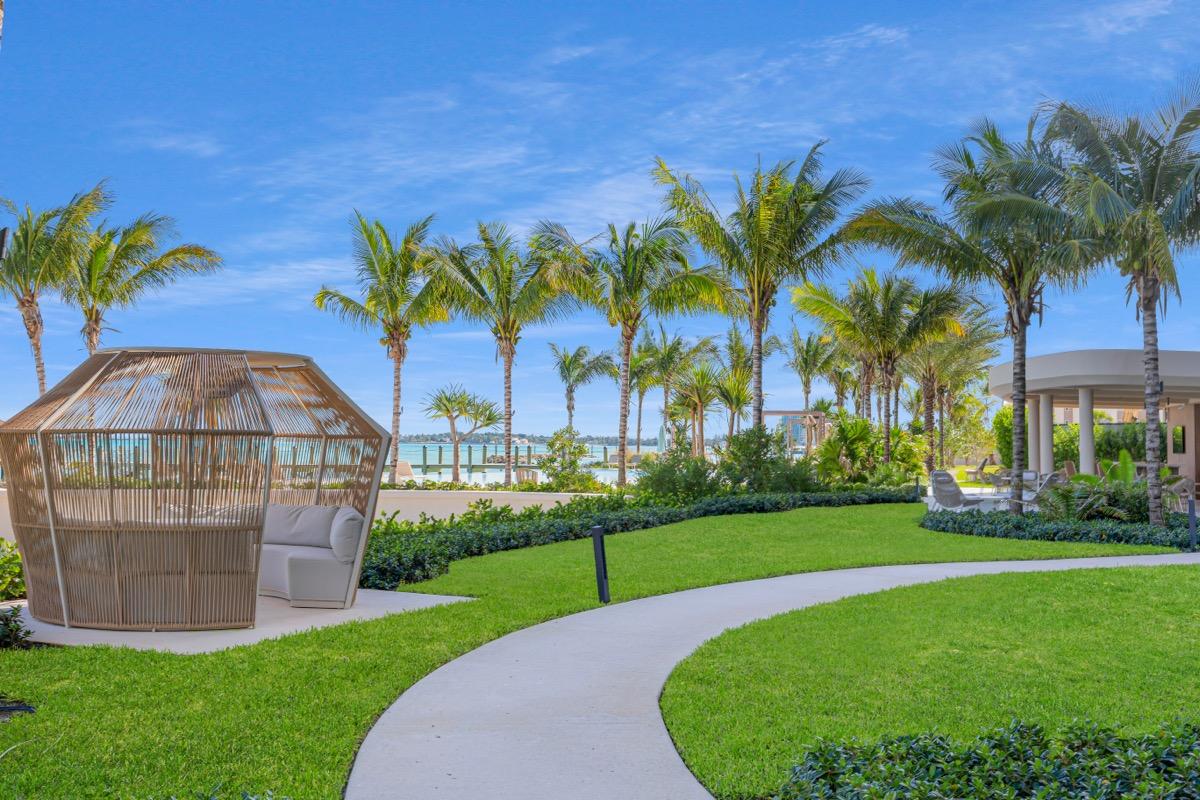
Exterior view at Aqualina Bahamas
Foreign Ownership Rules and Bahamian Property Laws
Foreign nationals can buy property in the Bahamas under relatively straightforward approval processes, with few restrictions compared to many other Caribbean jurisdictions.
- The International Persons Landholding Act (IPLA) governs foreign property ownership. International buyers have the right to purchase property in the Bahamas, but must register their acquisition with the appropriate government authorities.
- No permits are needed for properties under two acres. However, properties over two acres require additional permits for foreign buyers. Non-Bahamians also need permits for certain property types, including undeveloped vacant land, commercial-use parcels, or large-scale development projects.
- Foreign buyers must register with the Bahamas Investment Authority (also referred to as the Foreign Investment Board). This registration includes disclosing intended use, funding sources, and beneficial ownership.
- Title security and resale rights: Foreign property owners enjoy comparable rights to Bahamian citizens regarding title security, the ability to sell, and the ability to bequeath property through inheritance.
- Foreign-owned rental properties require an additional license from the Department of Inland Revenue. This covers compliance with lodging regulations, VAT on nightly rates, and tenancy laws that protect both landlord and tenants.
- Always work with a local real estate attorney. They will verify title, confirm zoning compliance, check for any encumbrances, and ensure full compliance with the IPLA before you close. Some islands have additional environmental or developmental constraints that only a local person with expertise will catch.
Taxes and Ongoing Costs for Bahamas Investment Property
While there is no income tax or capital gains tax, buyers must plan for meaningful transfer costs and annual ownership expenses.
- VAT on conveyance: Value-Added Tax (VAT) is 10% on purchases over $100,000. For foreign buyers, this flat 10% applies to the full purchase price. Stamp duty is shared equally between buyers and sellers, typically at 5% each on a gross sale basis-though the split is negotiable.
- VAT on services: Legal fees, agent commissions, appraisals, and other professional services are also subject to 10% VAT, adding to your total closing cost.
- Real property tax: Real property tax is based on the property’s market value. Owner-occupied properties benefit from lower rates and exemptions (the first USD 300,000 is exempt). Non-owner-occupied investment property faces higher rates with no cap-properties above USD 2 million may incur roughly 1.5% annually.
- Legal fees: Legal fees are typically around 2.5% of the purchase price, plus VAT. Title insurance, surveys, and registry fees add another 0.5-1%.
- Maintenance and insurance: As with any waterfront property, owners should budget for insurance, maintenance, and ongoing property care. Costs vary based on location, property type, and coverage requirements, making professional guidance an important part of the purchasing process.
The Buying Process: How to Buy Property in the Bahamas
The buying process is straightforward but formal, and you will need local professionals at every step.
- Define your goals and budget. Clarify whether you are purchasing a vacation home, a rental property, or a full-time residence. Your strategy shapes island selection-Nassau for access and rentals, Exuma or Eleuthera for privacy and lifestyle.
- Engage a licensed agent. Work with an agent registered through the Bahamas Real Estate Association (BREA), such as Bond Realty. They will assist with market analysis, arrange viewings, and help with price negotiation.
- Make your offer. Submit a written offer, typically through an Agreement for Sale. This includes the purchase price, earnest deposit, and contingencies such as title search, inspections, and financing.
- Retain a Bahamian attorney. Your attorney drafts or reviews the sales agreement, conducts a title search, verifies compliance with the IPLA, confirms all property taxes are current, and coordinates with the government department responsible for registration.
- Close the deal. Closing involves final payment of the purchase price minus deposit, settling VAT on conveyance, paying fees, registering your ownership with the Registrar General’s Department, and completing registration with the Bahamas Investment Authority for foreign buyers. Plan for several weeks to a few months for the full process.
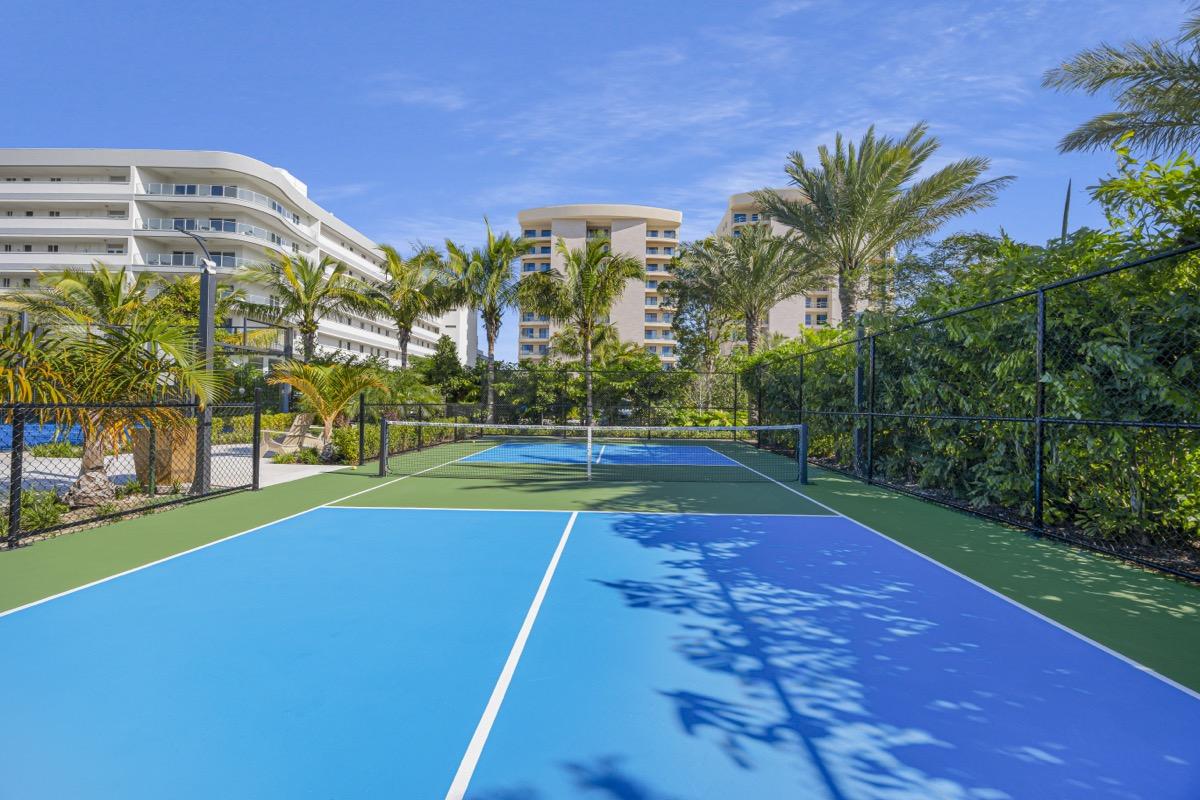
Resident amenities at Aqualina Bahamas
Financing and Mortgages for Foreign Buyers
Cash purchases dominate the luxury segment-roughly 70% of international luxury purchases are all-cash. However, mortgage financing is available for those who prefer leverage.
- Bahamian bank options: Institutions like RBC Royal Bank, CIBC FirstCaribbean, and Scotiabank offer mortgages to foreign buyers. Alternatively, you can use financing from your home country or, in some cases, developer financing.
- Down payment and LTV: Foreign buyers typically need a 30-50% down payment. Some lenders may extend up to 60-70% loan-to-value, depending on property type and buyer qualifications.
- Documentation: Expect to provide a passport, two years of tax returns or audited financials, bank statements showing available funds, a credit report from your home country, and a property appraisal. AML/KYC requirements are strict.
- Rates and terms: Interest rates for non-residents generally fall between 5.5% and 8%, with mortgage terms of 15-25 years. Fixed rates are rare and usually limited to the first 2-5 years before converting to variable.
- Developer financing: Some resort and off-plan developments, such as Aqualina, may offer phased payment schedules or incentives for cash buyers. These vary widely and carry project-specific risks.
Aqualina Bahamas: A Luxury Residential Development on Cable Beach
Aqualina Bahamas is a luxury oceanfront residential development located on Nassau’s prestigious Cable Beach coastline, just moments from Baha Mar Resort. Developed by Aristo Development, a leading Bahamian developer recognized for creating some of The Bahamas’ most distinguished residential communities and investment properties, Aqualina offers a collection of luxury residences designed for both lifestyle and long-term value. Every unit features private elevator access, floor-to-ceiling glass windows, and expansive verandas. Premium amenities include an infinity pool, fitness center, padel & tennis courts, wellness spa, movie theater, and full concierge services. The development is designed for buyers seeking a primary residence, vacation home, or long-term investment in Nassau’s luxury residential market. Its combination of location, amenities, and limited oceanfront inventory positions it among Nassau’s premier luxury residential offerings.
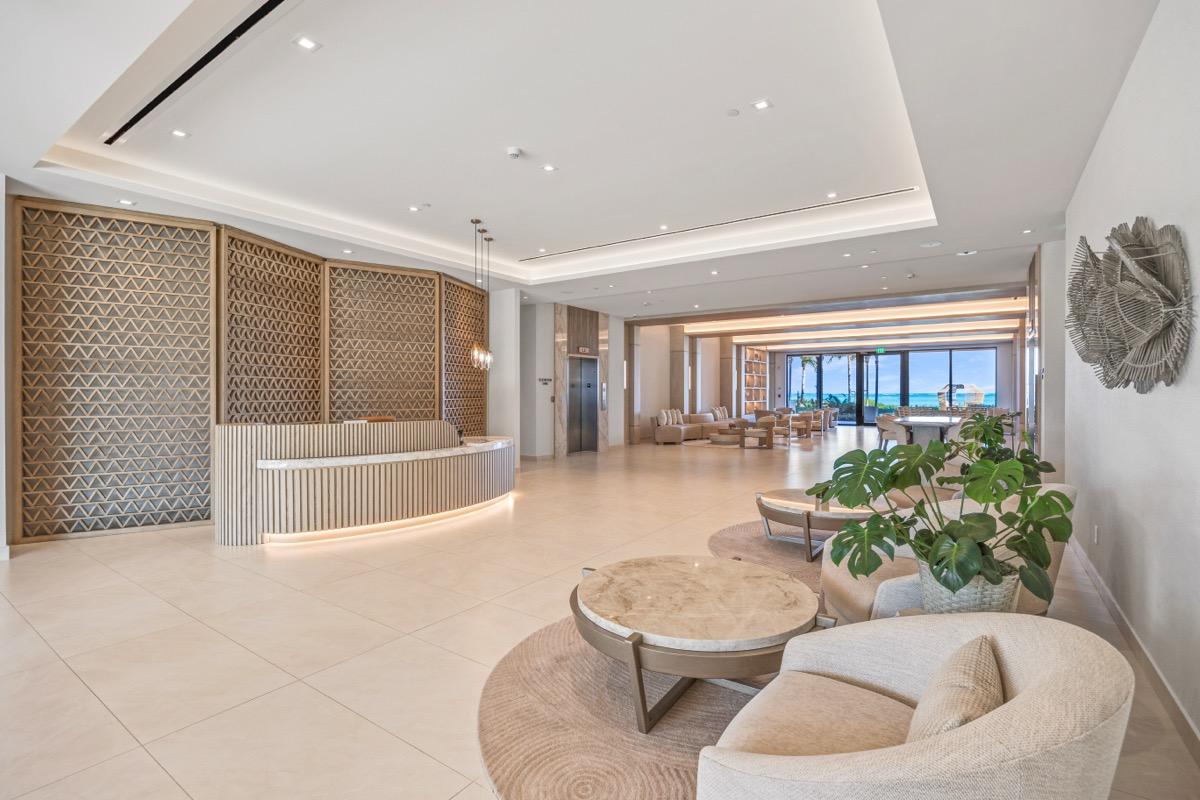
Tower 1 Lobby at Aqualina Bahamas
Investment Strategies and Returns for Bahamas Real Estate
Investors can blend lifestyle and financial returns when investing in bahamas real estate. Several factors determine which approach works best.
- Long-term leasing: Nassau and New Providence see consistent demand from expats, professionals, and corporate tenants. Long leases (1-3 years) provide steadier revenue with less operational effort, though per-night yields are lower than vacation rentals.
- Estimating net yields: Gross rental yields in prime tourism zones run 5-7%. After deducting property management (10-20% of revenue), insurance, maintenance, and real property tax, net yields typically land at 3-7.7%.
- Property management: If you do not reside full-time in the Bahamas, hire a local property manager. They handle cleaning, turnover, tenant relations, maintenance, licensing compliance, and rent collection-essential for protecting your money and your asset.
Risks, Challenges, and How to Mitigate Them
Like any international real estate investment, purchasing property in The Bahamas requires careful planning and due diligence. Understanding the key considerations upfront can help buyers make informed decisions and maximize long-term value.
- Regulatory and Transaction Considerations: Foreign buyers should work with experienced Bahamian legal and real estate professionals to navigate the purchasing process, complete required registrations, and ensure full compliance with local regulations. Timelines can vary depending on the property type and transaction structure.
- Insurance and Environmental Considerations: As with any coastal real estate market, buyers should account for insurance, maintenance, and long-term property care. Modern luxury developments are typically built to stringent building standards, and comprehensive insurance coverage helps protect owners and their investment. Reviewing construction quality, insurance requirements, and property management options is an important part of the due diligence process.
- Liquidity and Market Dynamics: Real estate should generally be viewed as a long-term investment. While prime locations in Nassau and New Providence continue to benefit from strong demand, market conditions can vary by island, property type, and broader economic trends. Buyers who focus on established locations, quality developments, and long-term ownership strategies are often best positioned to preserve and grow value over time.
Thorough due diligence and guidance from qualified local professionals remain the most effective ways to evaluate opportunities and manage investment considerations.
Conclusion: Is Buying Property in the Bahamas Right for You?
Investing in Bahamas real estate delivers a compelling package: zero income, capital gains, or inheritance taxes; a lifestyle most markets cannot match; strong rental demand from tourists and expats; and real residency benefits for committed property investors. Like any international real estate investment, buyers should carefully evaluate ownership costs, legal requirements, insurance considerations, and long-term investment objectives before purchasing.
- Clarify your goal. Are you seeking a second home, a pure investment property, or a pathway to residency? Your answer shapes every decision from island selection to financing.
- Take concrete next steps. Define your budget (including closing costs, insurance, and maintenance), shortlist islands and property types that match your priorities, and speak with a licensed Bahamian realtor and attorney before committing any money.
- Think long-term. For well-prepared investors who buy in the right location, engage the right professionals, and hold through market cycles, the Bahamas continues to offer above-average returns in one of the Caribbean’s most desirable settings. Start with an on-site visit-seasonal conditions and local infrastructure are best evaluated in person.