

For many international buyers, opening a bank account is one of the first practical steps toward owning property or establishing residency in The Bahamas. The country’s sophisticated financial sector has evolved alongside its luxury real estate market, giving buyers access to experienced commercial banks, private banking services, and international wealth management. Combined with a stable currency and close proximity to North America, the Bahamas offers an environment that supports both everyday banking and long-term financial planning.
Introduction to the Bahamas Banking Sector
The Bahamas has long been recognized as one of the world’s leading offshore financial centers. Private banking, trust administration, and wealth management are among the country’s core financial services.
For non-residents considering luxury real estate or residency, banking is a foundational step. A local bank account streamlines property closings, maintenance payments, and staff salaries. It also simplifies managing international finances. Private banking relationships bring investment portfolios, trusts, and foreign exchange management together under one institution.
The Bahamas combines a tax-neutral environment with political stability and a legal system based on English common law. With no personal income, capital gains, or inheritance taxes, the country continues to attract high-net-worth individuals seeking long-term residency, wealth preservation, and luxury real estate ownership.
Banking Architecture: Central Bank, Commercial Banks, and Offshore Services
The Bahamian banking system consists of three primary segments. The Central Bank of The Bahamas sets monetary policy, licenses institutions, and supervises compliance. Commercial banks handle day-to-day retail and business banking. Offshore and private banks serve non-resident clients with trust administration, portfolio management, and multi-currency services.
The banking industry is regulated to ensure compliance with international standards set by FATF and the International Monetary Fund.
| Bank Type | Primary Clients | Core Services | Typical Currency |
|---|---|---|---|
| Retail Commercial | Residents, property owners | Checking, savings, mortgages, credit | BSD, USD |
| Private / Offshore | UHNW individuals, family offices | Portfolios, trusts, multi-currency, credit | USD, EUR, GBP |
| Development / Institutional | Developers, large investors | Project finance, commercial lending | BSD, USD |
The Role of the Central Bank of The Bahamas
Headquartered in Nassau, the Central Bank of The Bahamas regulates the country’s licensed banks and trust companies while safeguarding the stability of the financial system. It oversees monetary policy, supervises financial institutions, manages exchange controls, and maintains the Bahamian dollar’s long-standing 1:1 peg to the U.S. dollar.
The Central Bank also plays an important role in preserving confidence in the country’s banking sector. Strong external reserves, prudent regulation, and compliance with international financial standards have helped establish The Bahamas as one of the Caribbean’s most respected international financial centers.
In addition to its regulatory responsibilities, the Central Bank oversees the Sand Dollar, the world’s first fully deployed retail central bank digital currency. This reflects the country’s continued investment in modern financial infrastructure while maintaining a stable and well-regulated banking environment.
Commercial Banks and Day-to-Day Banking for Residents and Non-Residents
Commercial banks form the foundation of everyday banking in The Bahamas, serving residents, property owners, businesses, and international buyers. The sector includes global institutions such as RBC Royal Bank, Scotiabank, and CIBC FirstCaribbean, alongside well-established Bahamian banks including Commonwealth Bank and Bank of the Bahamas. Together, these institutions support luxury property ownership, international business, and long-term residency in The Bahamas.
Most commercial banks offer a comprehensive range of services for internationally mobile clients, including:
- Multi-currency current accounts in BSD, USD, EUR, and GBP
- Residential mortgage lending for qualifying borrowers
- Secure online and mobile banking with international transfer capability
- Foreign exchange services
- Credit cards and overdraft facilities
- Corporate accounts for Bahamian-incorporated businesses
- Dedicated relationship managers for private banking clients
For international buyers, commercial banks play an important role beyond everyday banking. They facilitate property purchases, support ongoing ownership expenses, and provide the financial infrastructure needed for long-term residency and investment in The Bahamas.
Opening a Bank Account in The Bahamas
International buyers commonly open Bahamian bank accounts when purchasing property, establishing residency, or managing investments in the country. Like major financial centers worldwide, Bahamian banks follow international compliance standards, requiring applicants to verify their identity, source of funds, and financial background.
Many banks allow international clients to begin the application through secure digital onboarding. Depending on the institution, final verification may require either a visit to The Bahamas or certified documents submitted electronically.
Most international buyers establish a personal current account to manage property purchases and ongoing ownership expenses. Entrepreneurs may also open corporate accounts, while high-net-worth individuals often combine everyday banking with private banking services for investment management, trust planning, and wealth preservation. Many banks also offer multi-currency accounts that support holdings in Bahamian dollars, U.S. dollars, euros, pounds sterling, and other major currencies.
Documentation, Compliance, and Cross-Border Tax Considerations
Most institutions require a valid passport, proof of address, evidence of the source of funds, and a banking or professional reference. Corporate and trust accounts require additional documentation in line with international compliance standards.
The Bahamas participates in the Common Reporting Standard, while U.S.-linked clients are also subject to FATCA reporting requirements. Although the Bahamas does not levy personal income, capital gains, or inheritance taxes, clients remain responsible for meeting the tax obligations of their home jurisdiction.
Established private banks routinely assist international clients throughout the compliance process.
Private Banking, Trusts, and Wealth Management Structures
Effective banking strategies should align with broader property ownership, residency, and wealth planning goals. The Bahamas combines a mature financial sector, legal certainty, and experienced professionals, making it well suited to internationally mobile families and investors.
Private banking often serves as the foundation of long-term international wealth planning in The Bahamas. Many clients combine investment management, trust administration, and luxury real estate ownership within a single banking relationship, creating a more coordinated approach to managing global assets.
Private banks typically provide discretionary portfolio management, giving clients access to global equities, fixed income, alternative investments, and tailored wealth strategies based on their financial objectives and risk tolerance.
Bahamian trusts and foundations are commonly used to support succession planning, asset protection, and intergenerational wealth transfer. Many internationally mobile families appoint professional Bahamian trustees while maintaining investment management with the same or an affiliated private bank. This integrated approach simplifies administration while supporting long-term wealth preservation under a legal system based on English common law.
These banking strategies often become most relevant when international buyers establish long-term roots in The Bahamas through luxury real estate ownership.
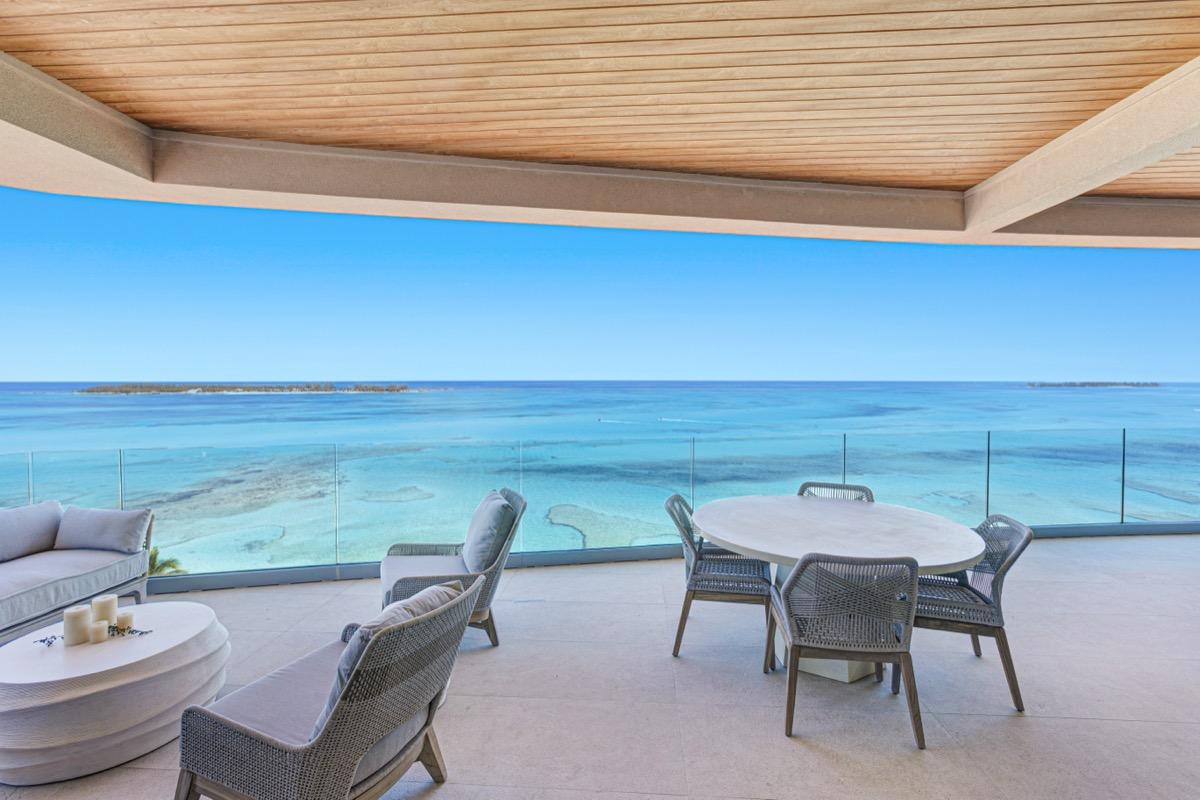
Aqualina Bahamas: Banking, Residency, and Oceanfront Investment in Nassau
Aqualina Bahamas demonstrates how luxury real estate, private banking, and long-term residency planning often intersect. Developed by Aristo Development, one of The Bahamas’ most established luxury real estate developers, Aqualina sits on Cable Beach in Nassau. Aristo has delivered more than $500 million in real estate across The Bahamas.
Its location places residents within minutes of Nassau’s leading commercial banks, private banking offices, law firms, and professional advisors. This proximity simplifies property transactions, investment meetings, and ongoing financial management. It also makes Cable Beach one of the country’s most convenient locations for internationally mobile families.
Many buyers maintain both a commercial banking relationship for day-to-day property ownership and a private banking relationship for investment management, trust planning, and wealth preservation. Together, these services support long-term ownership across multiple jurisdictions.
For buyers pursuing economic permanent residency, Aqualina complements a broader relocation and investment strategy. Property values at Cable Beach typically exceed the investment thresholds associated with economic permanent residency. An established Bahamian banking relationship can also support the financial documentation required during the application process.
Aristo Development’s reputation for quality construction and premium locations strengthens Aqualina’s long-term appeal. For international buyers, Aqualina illustrates how luxury real estate, sophisticated banking services, and long-term residency opportunities can complement a broader wealth preservation strategy.