

A growing number of high-net-worth investors are converting Bitcoin and other major cryptocurrencies into tangible real estate across The Bahamas. The rationale is simple: diversify digital wealth into a tangible asset within a jurisdiction that imposes no income tax or capital gains tax. For international investors, The Bahamas offers easy access to major US cities like Miami and New York.
Purchasing real estate in The Bahamas with Bitcoin requires specialised structuring, but the infrastructure now exists to support it. Regulated exchanges, experienced legal professionals, and developers that accept crypto directly have made cryptocurrency-funded transactions increasingly practical. The benefits can include faster settlement planning and greater flexibility for cross-border buyers.
Across the Bahamas, brokers and developers are becoming increasingly familiar with crypto-funded transactions, whether through direct BTC and USDT payments or managed crypto-to-fiat conversions. Luxury developments like Aqualina Bahamas on Cable Beach accept Bitcoin and Tether for qualifying oceanfront residences, reflecting growing interest in cryptocurrency-backed real estate ownership.
This article examines the legal context, transaction mechanics, risk management considerations, and practical realities of using Bitcoin to acquire property in The Bahamas.
Why The Bahamas Appeals to Crypto-Funded Property Buyers
The Bahamas offers a rare combination of attributes for buyers converting digital assets into property. Its tax neutrality, with no income or capital gains tax on property sales, eliminates local taxation friction on significant crypto gains.
The nation’s common law framework, reliable title registration system, and English-speaking professional services sector support larger real estate purchases funded by cryptocurrency, all within a politically stable and business-oriented environment. Building on its reputation as a leading offshore financial centre, The Bahamas has also emerged as an leading jurisdiction for digital asset businesses through the implementation of the DARE regulatory framework.
Prime submarkets such as Nassau, Paradise Island, and the Exumas offer a range of properties, from managed condo-hotel residences suited to a vacation home to private islands, giving buyers a range of options across the luxury residential market. Typical buyers include US and Canadian tech founders, European non-doms, and fund managers seeking waterfront homes with straightforward residency pathways and proximity to North American financial centres.
How Cryptocurrency Is Reshaping Real Estate Transactions in The Bahamas
The traditional closing process involving wire transfers, escrow, and conveyance is evolving to incorporate digital assets alongside conventional banking solutions. Wallet-to-wallet transfers and blockchain-based settlements can compress timelines for deposits and balance payments in cross-border transactions, eliminating multi-day international wire delays.
Emerging blockchain-based tools may support certain administrative aspects of transactions, although most Bahamian real estate purchases continue to rely on traditional legal documentation and conveyancing procedures. Licensed exchanges and payment processors convert Bitcoin or USDT into USD at closing, allowing sellers who prefer fiat currency to participate without holding digital assets themselves.
Real estate transactions can also be completed directly via blockchain when both parties agree to settle in crypto. A common pattern involves buyers holding BTC, converting via centralized exchanges into USD, and funding condo purchases in Nassau as cash buyers. Despite crypto funding, most transactions still record final sale prices in US dollars for clarity in land title registration and stamp duty assessment. While blockchain technology enables peer-to-peer property transactions in principle, most deals continue to involve legal counsel and title verification.
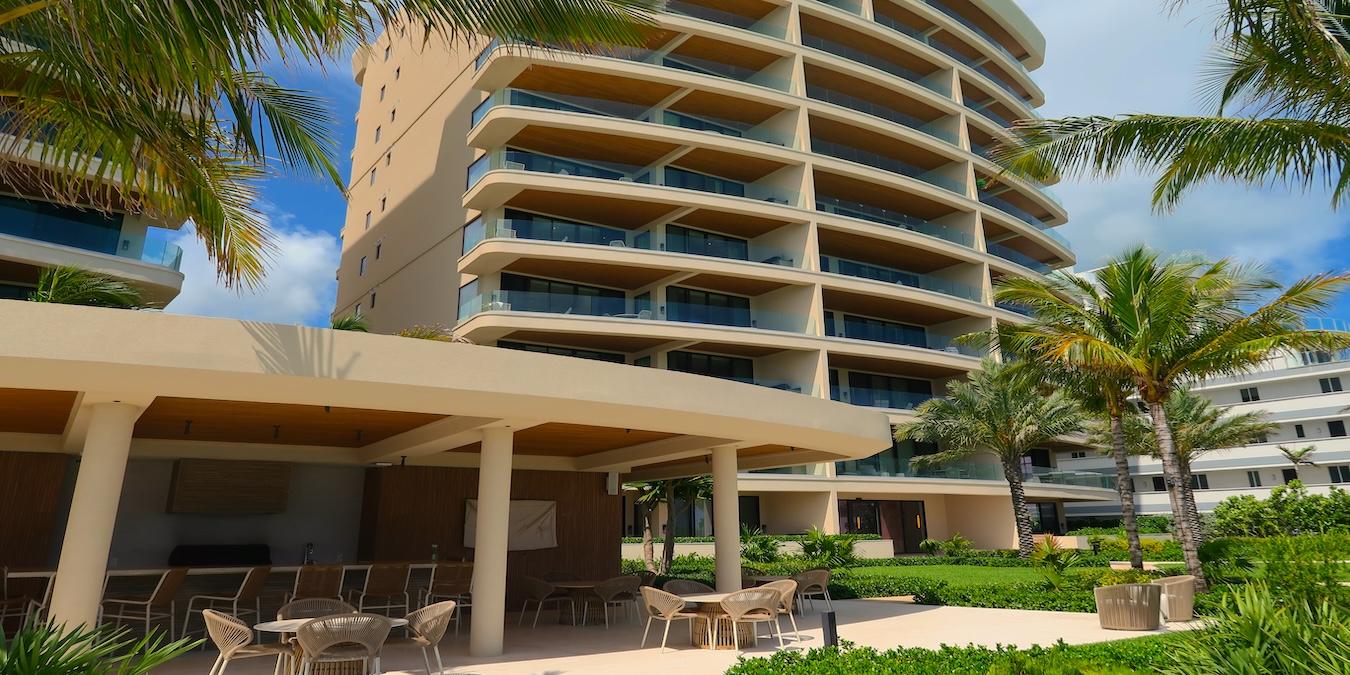
Exterior view of Aqualina Bahamas
Legal and Regulatory Considerations for Crypto Real Estate Purchases
Purchasing property with Bitcoin in The Bahamas requires compliance with property law and the DARE Act, which regulates cryptocurrency transactions and digital asset businesses. The updated DARE Act governs exchanges, custodians, and stablecoin issuers, mandating segregation of client assets, disclosure requirements, and reserve backing for stablecoins, while banning algorithmic stablecoins.
KYC and AML compliance are mandatory; Bahamian attorneys verify source of funds, often requesting exchange statements, wallet transaction histories, or on-chain reports tied to a crypto account to establish a verifiable paper trail. Legal documents must comply with traditional land records, with title transfers following conventional conveyancing regardless of payment method, and related legal and administrative steps must still be complete after funding is arranged.
Property purchases above USD 1,000,000 support Economic Permanent Residency applications, with priority processing for investments above USD 1,500,000. Stamp duty and government fees are calculated in US dollars based on the property’s value. Any property purchase is subject to a 10% stamp duty, regardless of whether the payment is made using cryptocurrency or traditional currency.
Early engagement with legal counsel is essential to ensure contracts address crypto payment mechanics, exchange rate locks, and conversion protocols, as standard purchase agreements require modifications for cryptocurrency transactions.
How Buying Property with Bitcoin in The Bahamas Works
Buying property with Bitcoin in The Bahamas follows many of the same steps as a traditional real estate transaction, but with additional planning around source-of-funds verification, exchange-rate timing, and crypto-to-fiat conversion.
Most transactions are still priced and documented in US dollars, even when the buyer funds the purchase with Bitcoin, Tether, or another approved digital asset. The buyer, seller, attorneys, and any payment processor agree in advance on how the crypto payment will be handled, when the exchange rate will be fixed, and whether the seller will receive cryptocurrency directly or converted fiat currency.
The process typically includes identifying a crypto-friendly seller or developer, completing standard legal due diligence, documenting source of funds, agreeing on payment mechanics in the purchase contract, and coordinating the transfer or conversion of digital assets before closing. In most cases, Bahamian attorneys and regulated exchanges or payment providers help ensure that the transaction remains compliant with property law, AML requirements, and title registration procedures.
For buyers, the most important considerations are clarity and documentation. Every transfer, conversion, wallet movement, and funding source should be recorded carefully so that the transaction can satisfy legal, banking, and compliance requirements in both The Bahamas and the buyer’s home jurisdiction.
Managing Volatility, Security, and Transaction Risk
Deploying seven- or eight-figure sums from crypto positions into real estate requires careful risk management. Bitcoin’s price volatility can materially affect transaction costs, particularly between signing and closing. Many buyers reduce this exposure by converting to stablecoins such as USDT, staging conversions over time, or agreeing on exchange-rate protections in advance.
Counterparty risk is equally important. Buyers should work only with regulated exchanges, experienced Bahamian law firms, and reputable transaction partners. Informal wallet-to-wallet transfers without written agreements should be avoided.
Digital assets should be secured using recognised best practices, including hardware wallets, multi-signature arrangements, and test transfers before moving larger sums. Detailed records of every conversion and transfer should also be maintained. While The Bahamas does not impose capital gains tax, converting Bitcoin into fiat currency may create taxable events in the buyer’s home jurisdiction.
Aqualina Bahamas: A Crypto-Friendly Oceanfront Development
Aqualina Bahamas, developed by Aristo Development, one of The Bahamas’ most established luxury real estate developers, provides a useful example of how cryptocurrency can be used to acquire high-end real estate in Nassau. Located on Cable Beach, the development’s completed and fully operational Tower 1, together with the forthcoming Tower 2, reflects continued interest in luxury oceanfront residences among international buyers.
Three-bedroom residences in Phase 2 currently begin at approximately $3,395,000, comfortably exceeding the minimum investment threshold required for Economic Permanent Residence. As a result, qualifying purchasers can combine luxury oceanfront ownership with a potential pathway to long-term residency in The Bahamas. The development also accepts Bitcoin and Tether for qualifying purchases, illustrating how digital asset wealth, premium real estate, and residency planning can intersect within a single transaction.
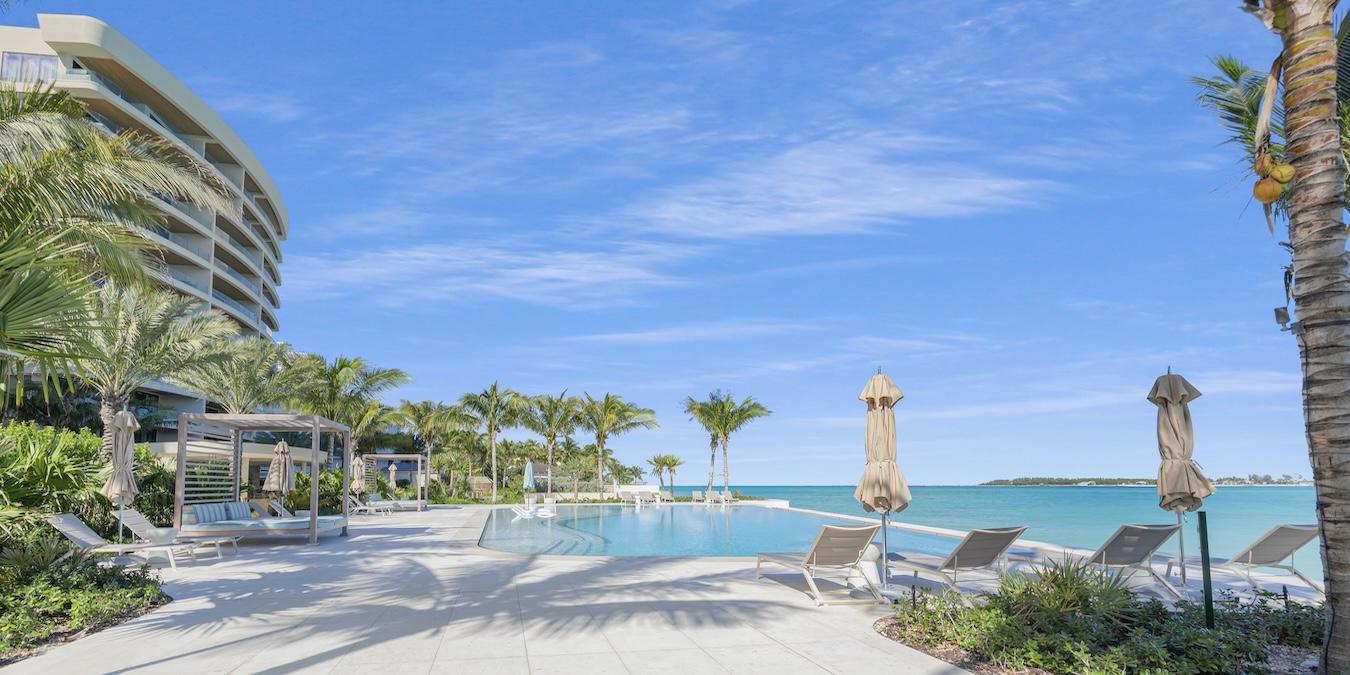
Infinity pool at Aqualina Bahamas
Choosing the Right Property Type for a Crypto-Funded Purchase
Different property types respond variably to crypto-origin capital. Managed luxury condos in Nassau, such as Aqualina Bahamas or Bayroc, often provide smoother digital asset transactions due to established sales teams. Note that purchasing undeveloped land over two acres requires a specific government permit. Some sellers may value the speed and flexibility that cryptocurrency-funded buyers can offer.
For investors focused on yield, small resort portfolios, marina slips, or mixed-use buildings expand options. Liquidity and exit strategies are important; managed residences in Nassau typically offer broader market appeal and faster resale potential compared to remote cays.
Practical Tips for International Buyers Using Crypto to Buy Bahamas Real Estate
International buyers must align home-country tax rules, Bahamian property law, and operational realities of moving large digital asset positions. Early coordination between Bahamian counsel and home jurisdiction advisors helps anticipate taxable events triggered by Bitcoin-to-fiat conversions. Establish banking and exchange relationships before making offers to avoid funding delays. Allocate only a considered portion of crypto holdings per asset to preserve flexibility.
For full relocation plans, factor in residency timelines and lifestyle infrastructure; Nassau offers established international communities and support services.
Outlook: The Future of Crypto Real Estate in The Bahamas
From 2024 through 2026, digital asset acceptance has shifted from experimental to operational across the Bahamian market and the wider real estate industry. Increasing numbers of attorneys, developers, and agents handle cryptocurrency transactions confidently, supported by the DARE 2024 regulatory framework.
Wider adoption of stablecoins, institutional custody solutions, and token-based payment structures in luxury developments is anticipated, with more buyers likely to use crypto directly in property transactions. Potential future integration of blockchain-based land registries or tokenised property interests could further reduce friction and increase transparency.
High-quality projects like Aqualina Bahamas illustrate how crypto real estate can blend income, lifestyle, and residency in a single investment thesis. For investors who structure transactions carefully, The Bahamas offers a compelling path from digital assets to tangible real estate ownership, combining luxury oceanfront living and tax-efficient wealth planning.