

For families with global lives and capital to preserve, Bahamas Residency is considered a top option for three reasons: fiscal clarity, geographic convenience, and quality of life. The country offers a tax-neutral environment with no personal income tax, capital gains tax, or inheritance tax, alongside a stable common law framework and convenient access to major international cities.
The decision is rarely only administrative. It is about where to live, how to hold property, how family members move, and whether a residence in Nassau or the Family Islands becomes a second home, primary base, or long-term investment asset.
Overview of Bahamas Residency Options
Obtaining residency in The Bahamas takes two main forms: annual or temporary permission to reside in the Bahamas, and permanent residence status. The main categories are the Certificate of Permanent Residence, Bahamas Economic Permanent Residence, the Annual Residence Permit, and shorter permits to reside.
All residency applications are reviewed by the Bahamas Department of Immigration in Nassau. The process typically includes due diligence, verification of supporting documentation, and, where required, a personal vetting interview. Applicants may be interviewed in person or by video conference as part of the assessment process.
|
Route |
Purpose |
Validity |
Right to work |
Minimum investment |
Typical timing |
|---|---|---|---|---|---|
|
Certificate of Permanent Residence |
Lifetime legal status for eligible applicants |
Lifetime unless revoked |
Usually requires work permit |
Case-dependent |
Several months or more |
|
Bahamas Economic Permanent Residence |
Investor route through real estate or approved instruments |
Lifetime |
No automatic work rights |
USD 1 million |
Several months; faster at higher values |
|
Annual Residence Permit |
Extended stay without permanent residency |
up to one year, renewable annually |
No local employment without work permit |
Financial standing required |
Often weeks to months |
|
Short permit to reside |
Students, seasonal residents, homeowners |
Variable |
Limited |
Case-dependent |
Variable |
Certificate of Permanent Residence in The Bahamas
The Certificate of Permanent Residence grants lifetime legal status to reside in The Bahamas unless revoked under the Immigration Act.
Typical applicants include long-term homeowners, retirees, investors with substantial Bahamian ties, and spouses of a Bahamian citizen. Non-residents married to Bahamian citizens may be eligible to apply for permanent residence after five years of marriage. Applicants may be required to provide supporting civil documents, including marriage certificates, birth certificates, divorce decrees, or death certificates where applicable.
Eligibility turns on good character, financial self-sufficiency, a clean police record, and no threat to public order. Applicants are typically required to provide police clearance certificates, medical certificates, proof of financial means, and supporting identity documents.
Permanent residence does not confer the right to work. A work permit is normally required unless a statutory exemption applies. It also does not grant Bahamian citizenship or voting rights. Permanent residence can be revoked for serious criminal convictions, prolonged absence often referenced as over three years, misrepresentation, or conduct contrary to the public interest.
Bahamas Economic Permanent Residence (Real Estate and Investment Route)
Bahamas Economic Permanent Residence is the primary pathway for international investors seeking long-term residency through qualifying investments. The program grants permanent residence status to approved applicants and is most commonly accessed through luxury real estate ownership.
Unlike temporary residence permits, Economic Permanent Residence provides lifetime residency rights, although it does not confer citizenship, voting rights, or unrestricted employment rights. Eligible family members may generally be included within the application.
One of the program’s key advantages is the flexibility it offers internationally mobile individuals and families seeking a long-term base in The Bahamas while maintaining personal and business interests elsewhere.
Developments such as Aqualina Bahamas on Cable Beach are often considered by investors seeking residency through real estate ownership because they comfortably exceed the government’s investment thresholds and align with the lifestyle objectives that attract many permanent residents to The Bahamas.
Minimum Investment and Qualifying Assets
The current figure range begins at USD 1 million for approved Bahamian real estate or qualifying financial instruments. Qualifying assets typically include approved Bahamian real estate, including high-end residential property, or zero-coupon bonds issued by the Central Bank of The Bahamas.
Investors often prefer oceanfront property in Nassau because it combines liquidity, rental appeal, and a clear lifestyle rationale. The property should be legally titled to the applicant or approved structure, free from disputes, and supported by documentary proof before submission of the application.
Key Benefits of Economic Permanent Residence
The primary benefit is permanent residency without routine annual renewal. It gives the freedom to spend extended periods in The Bahamas while preserving global mobility.
The fiscal framework is central: 0% income tax, 0% capital gains tax, no inheritance tax, and potential real property tax concessions for certain approved developments or rental-program structures.
Permanent residents provides a potential pathway toward future citizenship, subject to applicable residence requirements and government approval. Individuals considering naturalisation should seek professional advice regarding the potential impact on their existing nationality and citizenship status.
Residency in The Bahamas offers more than tax efficiency and global mobility. Residents benefit from a stable, English-speaking environment, high-quality healthcare and education, convenient international connectivity, and access to the luxury coastal lifestyle that has made Nassau a sought-after destination for high-net-worth individuals.
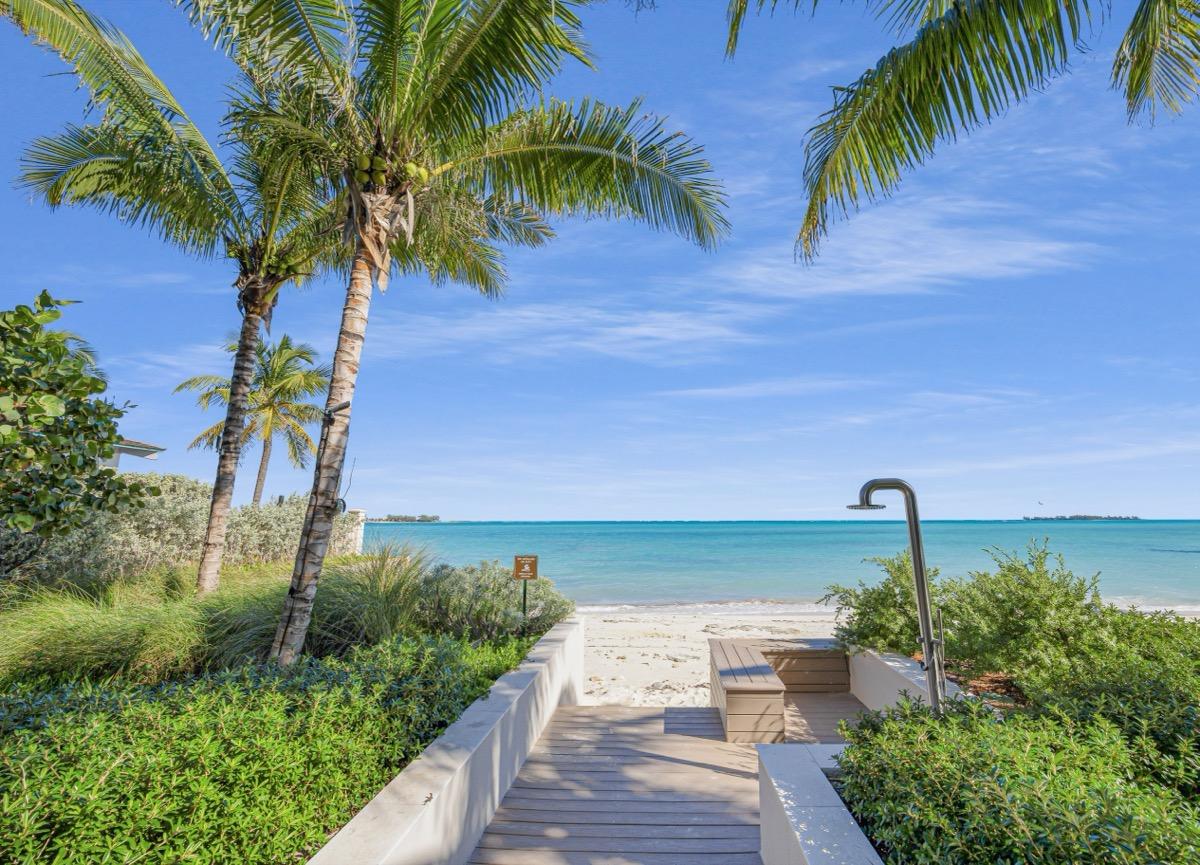
Private beach access at Aqualina Bahamas
Annual Residence Permit and Other Non-Permanent Options
The Annual Residence Permit is a flexible route for individuals and families who want extended time in The Bahamas without permanent residence. Annual Permit to Reside is for non-Bahamians who wish to live in the Bahamas, usually without engaging in local employment.
An annual permit can be used by second-home owners, retirees testing a move, and remote workers with foreign income. Applicants must show independent means, accommodation, passport validity, and financial support. The Annual Residence Permit is commonly granted up to one year and is renewable annually.
The application requires notarized government forms and payment of applicable processing fees. Additional fees may apply depending on the residency category and supporting documentation required.
Specialised options include the annual homeowner’s residence card, resident homeowner permits, student permits, and seasonal permissions designed to facilitate entry with minimal formalities. These do not equal full residence permit permanence or permanent residence.
Eligibility, Application Process, and Supporting Documents
All residence and permanent residency applications go through The Department of Immigration, often with Bahamian counsel or an authorised agent. The usual steps are consultation, completion of forms, assembly of supporting documents, submission to the immigration department, interview, due diligence, and decision.
Documentation requirements vary by residency category but generally include identity documents, financial information, police clearances, and medical records. The application process can take several months to complete, especially when investment files, dependent files, or overseas clearances are involved.
A typical complete list includes:
-
notarised application form and certified copy of the bio data page;
-
passport, bio data, photographs, and birth certificate;
-
original police certificate and medical certificate;
-
financial statements, bank references, and character references;
-
documentary proof of real estate, coupon bonds, or zero coupon bonds;
-
marriage certificate, copy of marriage certificate, divorce decree, or spouse’s death certificate where relevant;
-
spouse’s birth certificate and documents for dependent children.
Residence Requirements and Ongoing Obligations
Most Economic Permanent Residence categories do not impose strict minimum stay rules. Citizenship planning is different: an applicant seeking naturalisation should expect to prove real ties and material time in The Bahamas over the relevant period.
Obligations include keeping contact details current with the department, maintaining the qualifying investment for at least 10 years, renewing passports, and updating dependent documentation. A file should be completely submitted before the department is asked to decide.
Revocation or non-renewal can follow serious criminal activity, false statements, failure to maintain investment, or conduct against the public interest. If circumstances change, residents should seek authorization before assuming a permit to reside remains valid.
Role of Real Estate in Securing Bahamas Residency
Real estate remains the preferred route for Economic Permanent Residence because it combines a qualifying investment with lifestyle benefits, long-term ownership potential, and the opportunity to establish a permanent base in The Bahamas.
Nassau remains the primary destination for Economic Permanent Residence applicants due to its international connectivity, established infrastructure, luxury residential inventory, and proximity to major North American cities.
Common qualifying properties include luxury condominium residences in Nassau, villas in gated communities, and resort-branded homes. Developments like Aqualina Bahamas combine oceanfront living, managed ownership, and pricing aligned with Economic Permanent Residence thresholds.
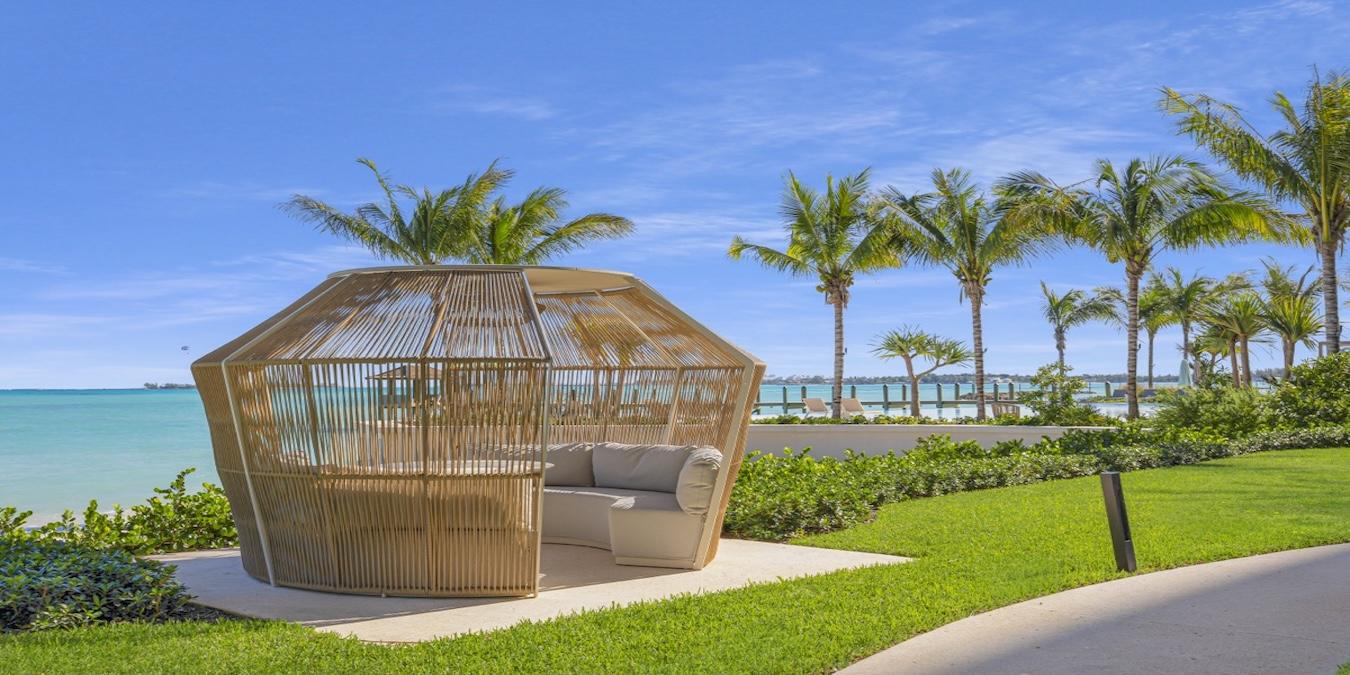
Exterior view at Aqualina Bahamas
Due diligence should address clean title, developer track record, condominium rules, insurance, rental policies, and any wording required by the immigration department to connect the purchase to the residence permit application.
Using Aqualina Bahamas as an Example Investment
Aqualina Bahamas is a 60 unit ultra-luxury oceanfront development on Cable Beach, Nassau, developed by Aristo Development, a leading Bahamian luxury real estate developer. Tower 1 is complete and operational with a managed rental program; Tower 2 is scheduled for completion by the end of summer 2026.
Three-bedroom residences in Phase 2 start from approximately USD 3,395,000, comfortably exceeding the usual USD 1 million minimum investment for Bahamas Economic Permanent Residence.
Buyers include vacation home owners, permanent relocators, and local Bahamian downsizers. Some use the property as a primary residence; others combine personal use with a fully managed rental program.
Aqualina Bahamas may support an application for Economic Permanent Residence, but final decisions on any residence permit, annual permit, or permanent residency status rest with the Bahamas Department of Immigration.
Citizenship, Long-Term Planning, and Professional Advice
Bahamas Residency and Bahamian citizenship are distinct. Citizenship can be applied for after holding permanent residency for 10 years, subject to statutory requirements, residence evidence, and discretionary approval by the authorities.
The better approach is to view Bahamas Residency as part of a wider family plan: property ownership, asset protection, succession, education, healthcare access, and mobility. For US, Canadian, UK, and European families, cross-border tax advice remains essential even where The Bahamas imposes no personal income tax.
Engage Bahamian legal counsel, immigration advisers, and tax professionals before committing capital. Then assess whether an Annual Residence Permit, Certificate of Permanent Residence, or economic permanent route best matches the way your family intends to live.
For many buyers, the next step is practical: compare suitable real estate in Nassau, confirm eligibility, and structure a compliant relocation plan that can endure beyond the first approval.
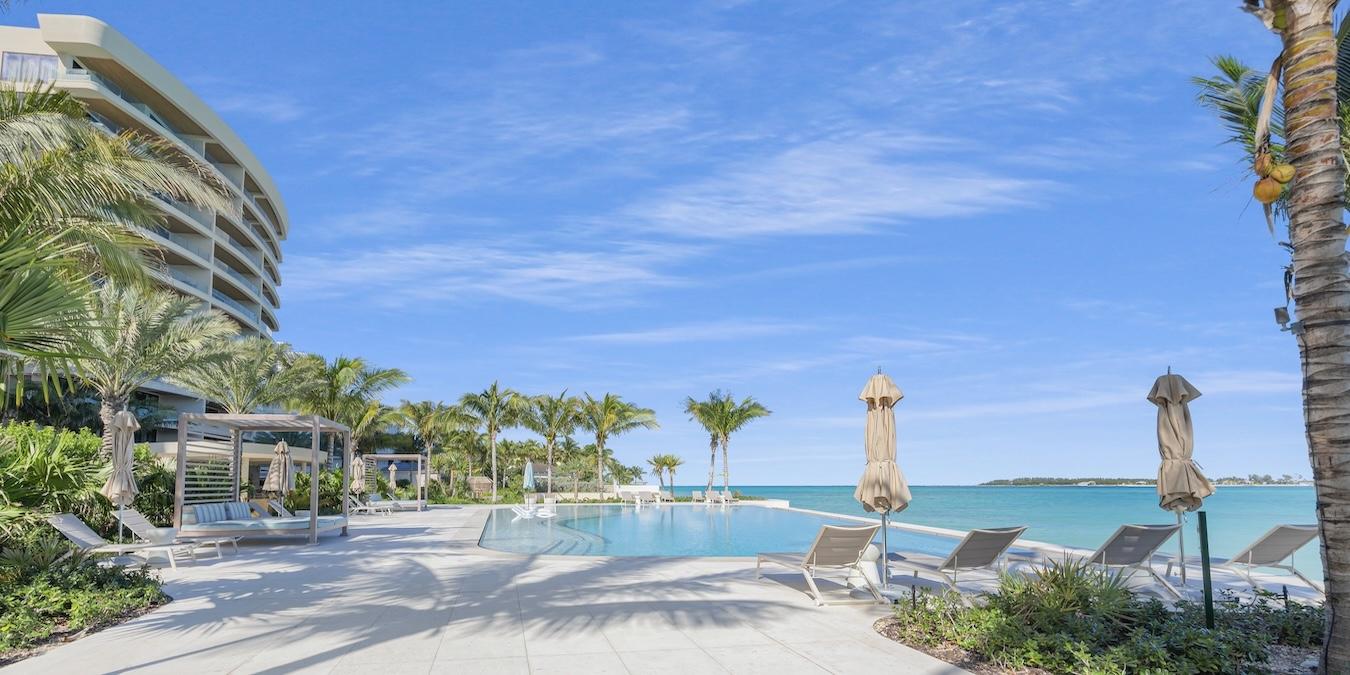
Resident Amenities at Aqualina Bahamas